The Evolution of a Blog
Welcome to TaiwanCentric, my new magazine-style blog, consisting of carefully researched, human-written articles. It is a makeover of my previous blog, the Culture Shack, which was started over a decade ago and originally focused on expat life in Taiwan. But my vision of what to write about evolved over time.
This was partly due to some very serious and unexpected events. Russia’s full invasion of Ukraine in February 2022 shocked the world. Six months later, there was another shock: a huge and sophisticated encirclement exercise around Taiwan by the People’s Liberation Army (PLA), following a visit by US House of Representatives Speaker Nancy Pelosi.
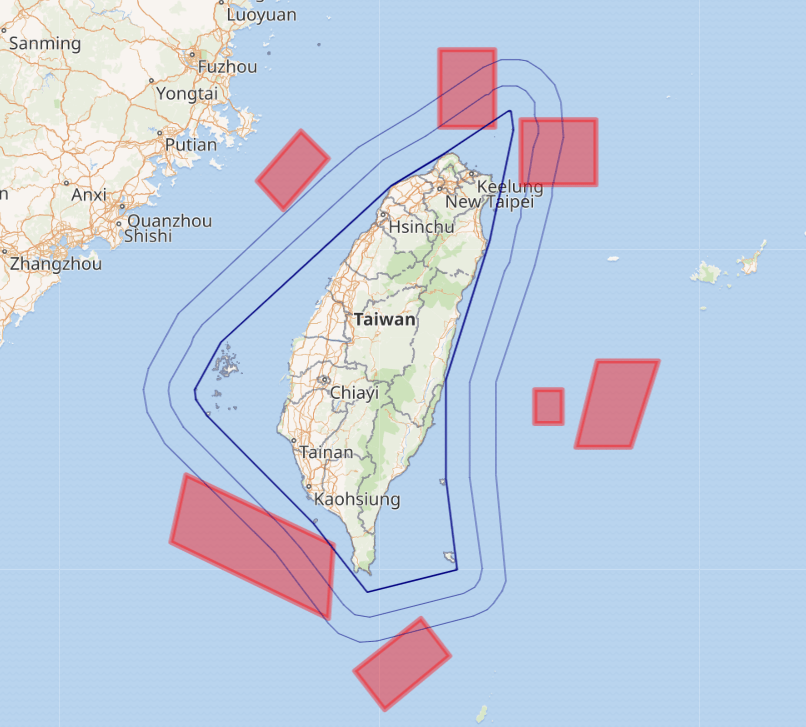
Five more large-scale military exercises have occurred since then, accompanied by Chinese Communist Party (CCP) rhetoric that Taiwan must accept being part of the People’s Republic of China (PRC), one way or another. The implications are clear: There is a real possibility that Taiwan could be attacked in some form by the PRC, just as Ukraine was by Russia.
For someone enjoying the peaceful life in Taiwan, this was jarring, and it motivated me to write a series of articles about a potential military contingency with China. I also published a free e-book called Resilience Roadmap: An Emergency Preparedness Guide for Expats in Taiwan. The guide aims to help people prepare for a war scenario, as well as more commonly discussed hazards such as fires, typhoons, and earthquakes.

Red Alert
Then a political earthquake happened in Taiwan, one that shook people out of any illusion that Taiwanese were united in standing up to the threat from China. In January 2024, the Chinese Nationalist Party—aka the Kuomintang (KMT)—gained control of the Legislative Yuan in a coalition with the Taiwan People’s Party (TPP). They charged out of the gate with a number of contentious bills that challenged the power of the executive branch.
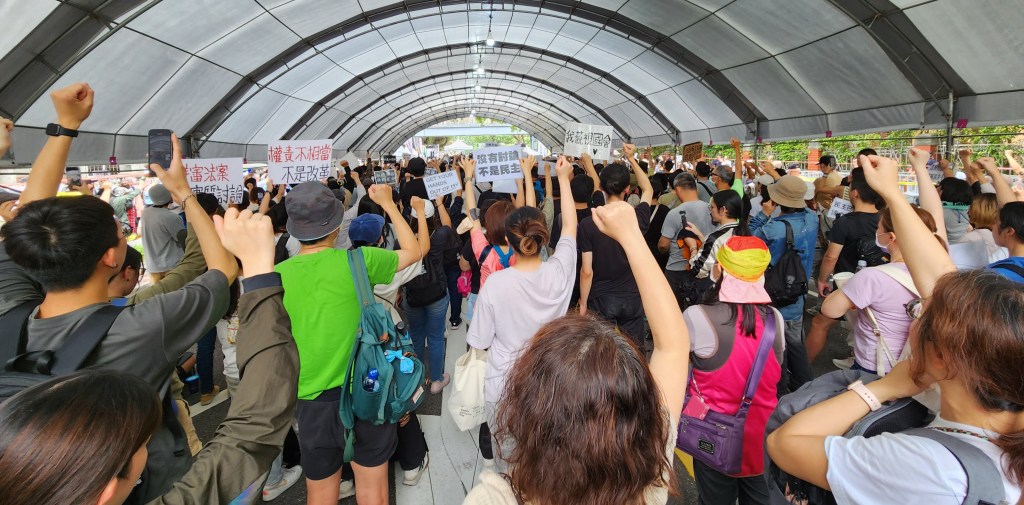
In December 2025, the KMT-TPP coalition passed a bill aggressively shifting the allocation of tax revenues from the national government to local governments. It would have reduced the national government’s spending power by around 30%, and made major upgrades to the military nearly impossible, according to Taiwan’s Ministry of National Defense.
This was very troubling at a time when experts were calling for Taiwan to increase military preparedness, not only for direct deterrence, but to send the right signal to the United States.
In response, Taiwan’s premier refused to countersign the bill, leading to an unprecedented constitutional standoff. The matter has yet to be resolved.
More importantly, the KMT-TPP coalition delayed passing the Lai Ching-te administration’s November 2025 special US$40 billion military budget. Its goal was to build a “T-Dome” anti-missile defense system, vastly enhance domestic drone warfare capability, and buy advanced US missile systems to make Taiwan a “porcupine” to deter PLA aggression.
Debate about this bill was still raging in April 2026, when KMT Chairperson Cheng Li-wun made a controversial visit to China. The trip was meant to underscore the KMT’s vision of peace through engagement rather than military deterrence. CCP Chairman Xi Jinping met Cheng and played the gracious host, but also called for renewed efforts to advance cross-strait “reunification.”
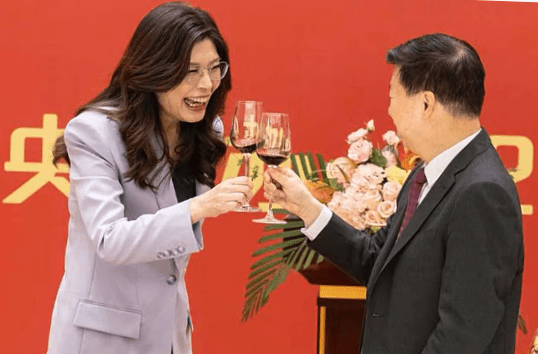
After Cheng’s trip, and just days before the Trump-Xi summit in May, legislators finally agreed to a watered-down US$24.8 billion version of the special military budget.
However, Trump’s views on Taiwan seem to have shifted—for now at least—during his talks with Xi. Right after the summit, Trump publicly warned Taiwan not to declare independence. He also made a statement to Fox News that Taiwan arms sales were “a very good bargaining chip” with China. A few days later, the chief of the US Navy announced that weapons sales to Taiwan would be paused due to the war in Iran—a reason most experts believe lacks credibility. (Update: That Iran was not the reason for the pause was recently affirmed by US Secretary of War Pete Hegseth.)
Future arms sales to Taiwan are now in limbo, weakening deterrence against China. Would Trump have agreed to sell more weapons to Taiwan if the special military budget had been approved much earlier? Would he have cancelled the deal anyway, after the summit with Xi? It is impossible to tell. But a significant opportunity to bolster Taiwan’s defenses may have been lost due to KMT resistance.
Some claim that this was just an unintended outcome of fractious Taiwanese politics, and there is doubtless some truth in that. But many critics accuse the KMT-TPP coalition of working in concert with the CCP to undermine Lai’s agenda, either for political gain, animus toward the DPP—or even because some of them support annexation to China. In any case, it is the CCP that is the big winner here.
Urban Explorations
As someone who strongly supports Taiwan’s autonomy, this has all been very concerning. There was no way I could go back to writing about prosaic topics in the Culture Shack. But I could not just do a website about Taiwan security and politics. There was one more aspect to be incorporated into the blog: discovering and describing Taiwan’s distinct society, diplomatically recognized or not.
After I published Taiwanese Feet: My walk around Taiwan in 2020, my travelogue about walking around the entire coastline of Taiwan, I started a follow-up project: to walk or bicycle through every urban street and neighborhood in Greater Taipei.
One reference for this kind of undertaking is the “Every Single Street” project done in San Francisco in 2018 by ultra-runner Ricky Gates. My pace, however, is much slower and the focus more observational. The objective is to get to know the entire metro area on a personal level and in granular detail, both as a form of deep research and also as a challenge.
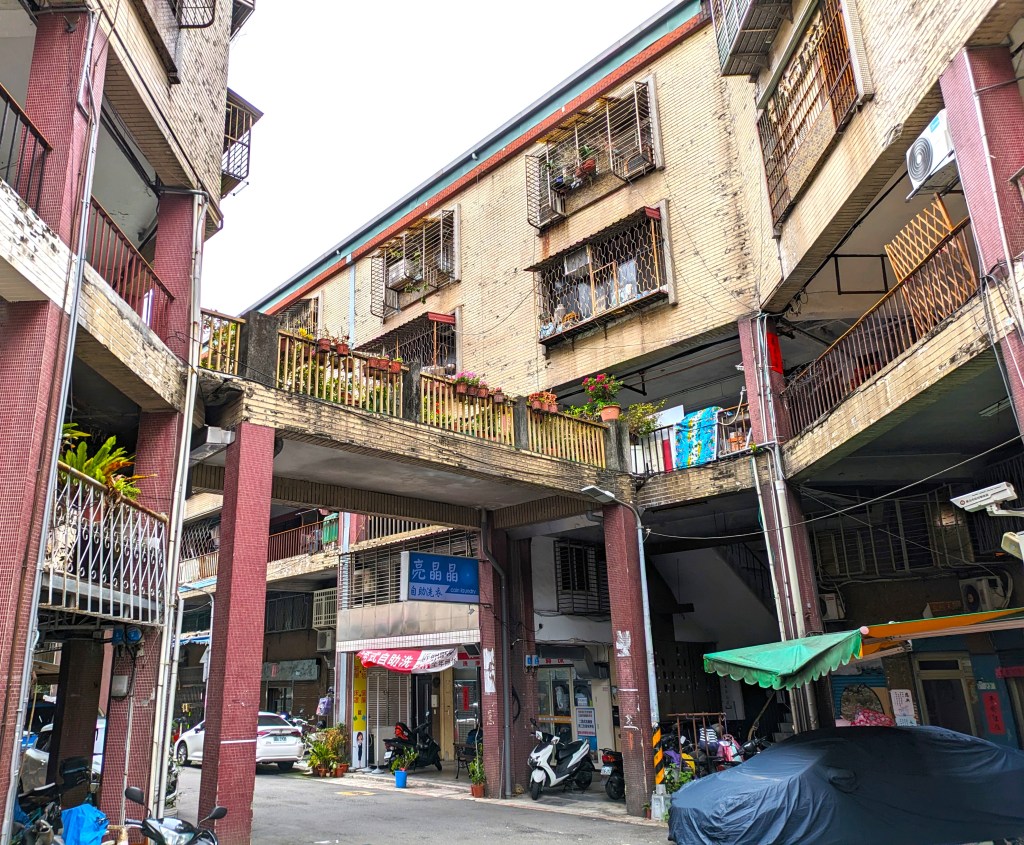
By John Groot
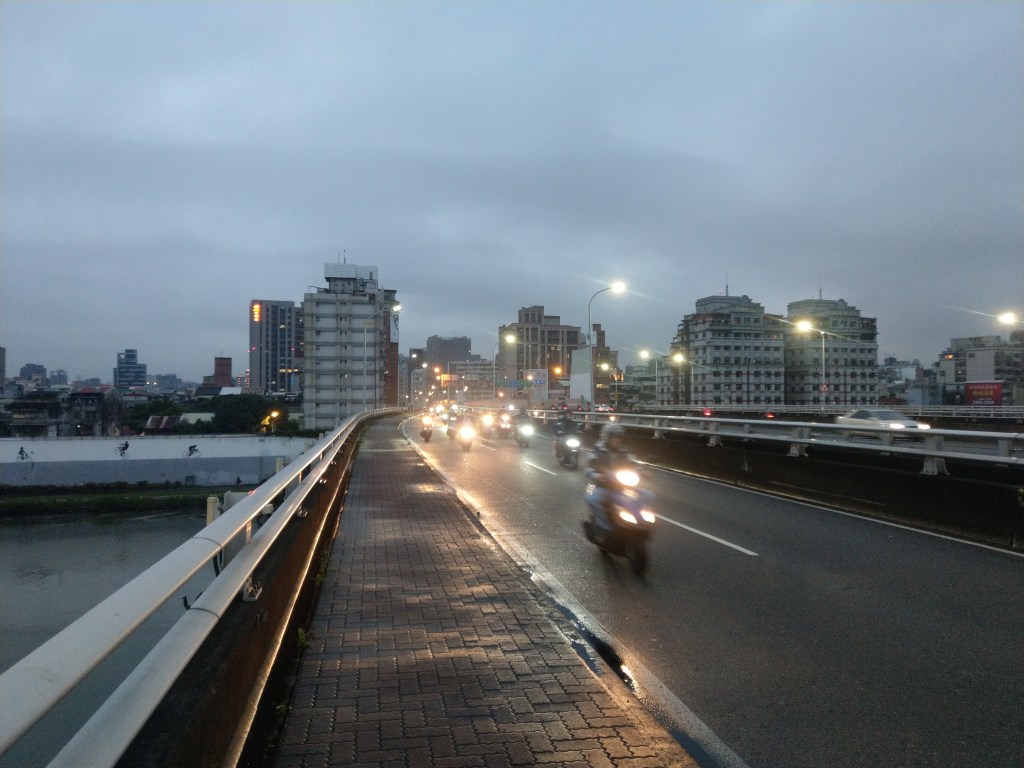
This Taipei project is about 60% finished, and I have really enjoyed seeing the city with new eyes. I have made many interesting discoveries, like gangster temples, surreal industrial landscapes, and Qing-dynasty-era farmhouses surrounded by apartment high-rises. I met an elderly man still living in the tiny old lane-house where he grew up, remembering over 70 years of the neighborhood changing around him.
My sense of the daily pace of life in the city is sharper than ever before. These ramblings have led to follow-up research on the history of Taipei, about its society, culture, economy, politics, and urban development. It is fascinating stuff, and provides abundant material to write blog articles.
Confluence
But how could I combine, in one blog, the theme of Taiwan politics and security with the Taipei stories based on my urban exploration? I wanted them to complement each other, rather than contrast. This took me a while to figure out. But in the end, the answer was right there all the time: The link is my own positive focus on Taiwan that I want to share with readers.
Most people just want to get on with their lives, unharassed. If China would just let Taiwan be Taiwan, I would not spend much time thinking about local security and politics. I would much prefer just to continue my research and writing projects about Taiwan’s history and the urban landscape of Taipei.
But China intends to annex Taiwan, and may well do so in my lifetime. So, I will do what I can to prevent this by telling the world how much is at stake.
Taiwan is special: It is safe, friendly, modern, and has a great blend of traditional culture and liberal democracy. It is also a spectacular success story thanks to decades of hard work and innovation. It would be a tragedy if the end of this long evolution toward prosperity and freedom involved Taiwan being swallowed by a repressive communist dictatorship.
If writing about Taiwan’s unique history and identity can help it survive in an increasingly dangerous world, then I am happy to do so.
And that is TaiwanCentric.


 TaiwanCentric
Leave a comment