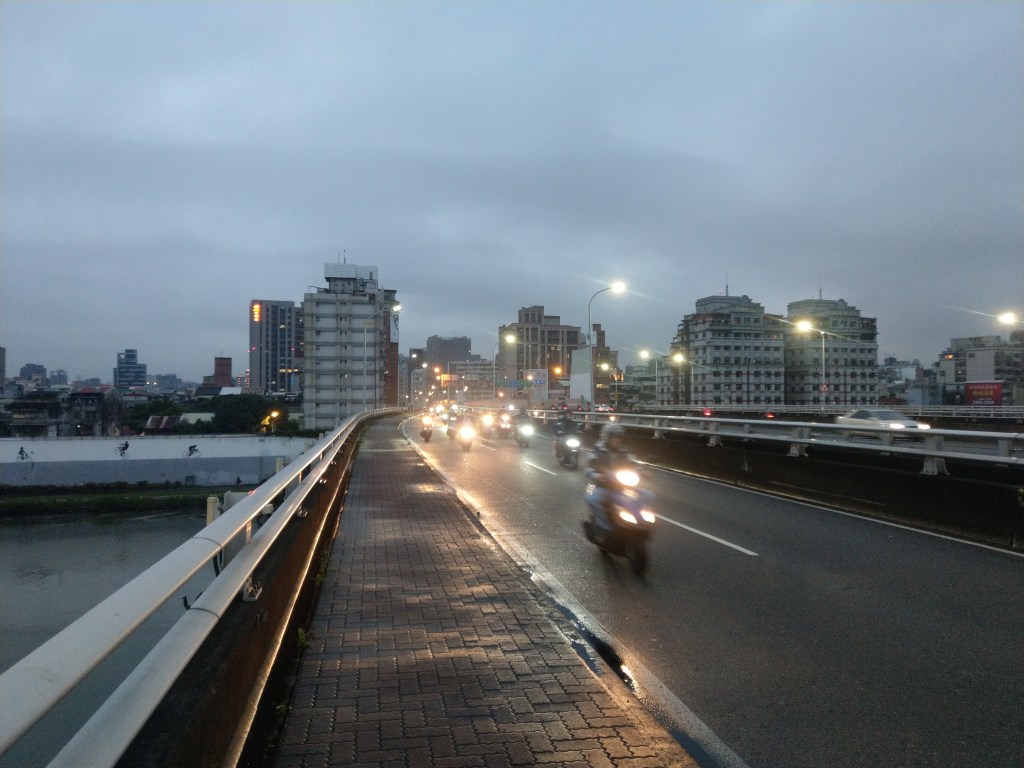
Beitou is famous for hot springs, Tamsui for sunsets, and Xinyi for Taipei 101. Many parts of Greater Taipei have their famous attractions. But poor old Sanchong, a bustling inner-city district of New Taipei City, is usually overlooked as a kind of gritty “nowheresville.” Its chaotic streets, uneven sidewalks, and endless rows of ageing buildings have little appeal. Beneath the grungy surface, however, there are fascinating stories to be told.
Four hundred years ago, Sanchong was a swampy, alluvial plain of gravel, sand, and silt where the Dahan and Xindian Rivers joined to become the Tamsui. Indigenous groups harvested fish, shrimp, waterfowl, and taro there.
In the 18th century, Qing-dynasty settlers from China started moving into the Taipei Basin in increasing numbers. Many of them settled along the Dahan River, which flows into Taipei from the west. They named one settlement Sanchongpu, meaning “third plain.” This marked it as the third major agricultural area developed after Touqianpu (first plain, in modern-day Xinzhuang) and Erchongpu (second plain, on the border between Sanchong and Xinzhuang.)
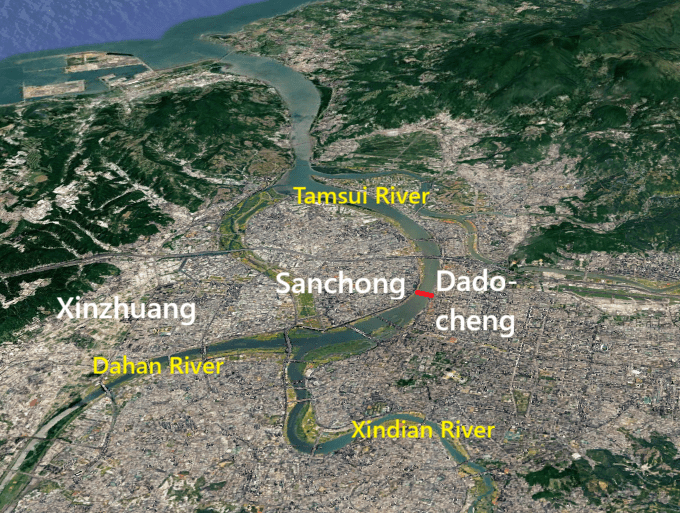
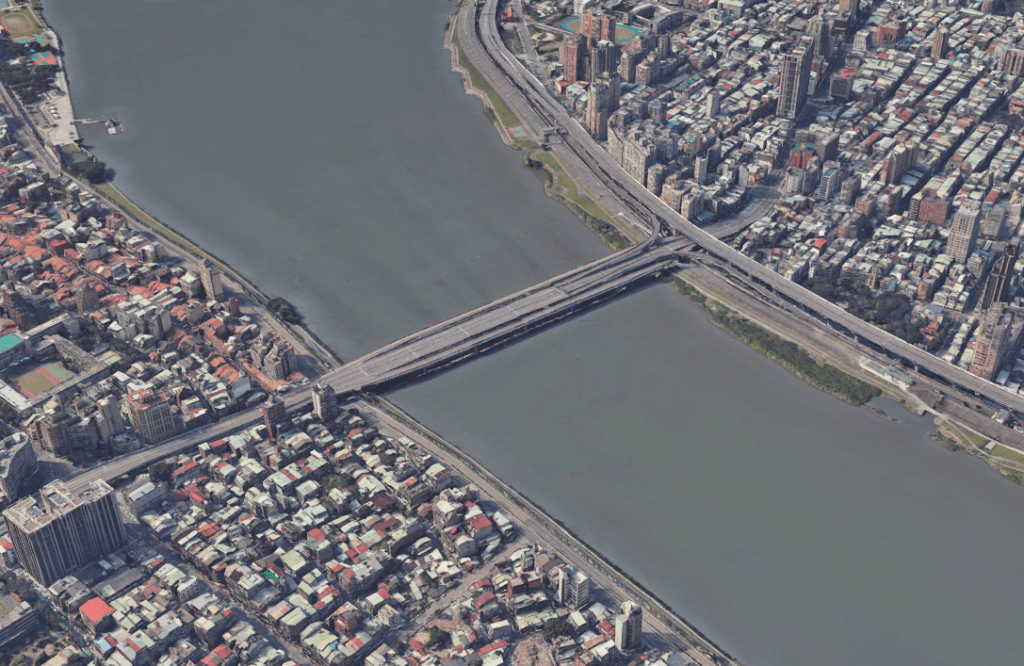
Map data from Google Earth. Image Copyright 2026 Airbus
Data SIO, NOAA U.S. Navy, NGA, GEBCO
The Sanchong area was rural, its small population being mostly farmers and fishermen. Although it had basic ferry links to the Taipei side, the wide and flood-prone Tamsui River kept it isolated from the hustle and bustle of city life for two hundred years.
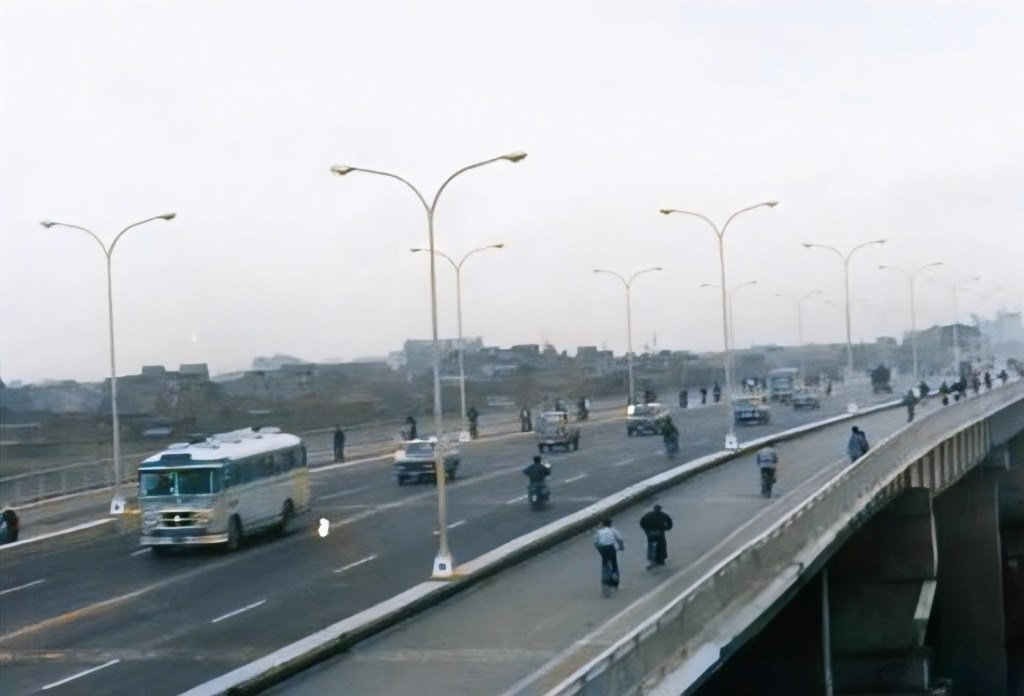
All that changed when they built the Taipei Bridge. Linking the undeveloped land in Sanchong to Taipei’s markets and industries was a spur for growth on both sides of the river. This was especially true during the Taiwan Miracle, when Sanchong’s industrialization became an important contributor to Taiwan’s export-led success.
Hundreds of thousands of migrant laborers and entrepreneurs from all over Taiwan settled in the area. It was easier and cheaper to find a place to live there, and it was just across the bridge from Taipei. They brought their own temple and food traditions with them. Over time, this blended group of locals combined with the “Mainlanders” from the post Chinese Civil War diaspora, encapsulating how much of Taiwan’s modern society was formed.
There were five iterations of what we now call Taipei Bridge, each one playing an important role in the history of that time.
Tamsui Wooden Bridge (Version 1)
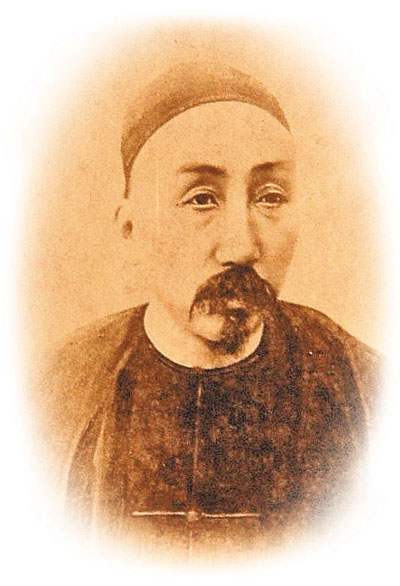
Liu Mingchuan was the first governor of Taiwan Province under the Qing. An ambitious modernizer, he created Taiwan’s first telegraph system and electric streetlights. Another big project was a railway line from Keelung to Hsinchu that would boost trade—as well as military readiness for a possible Japanese invasion.
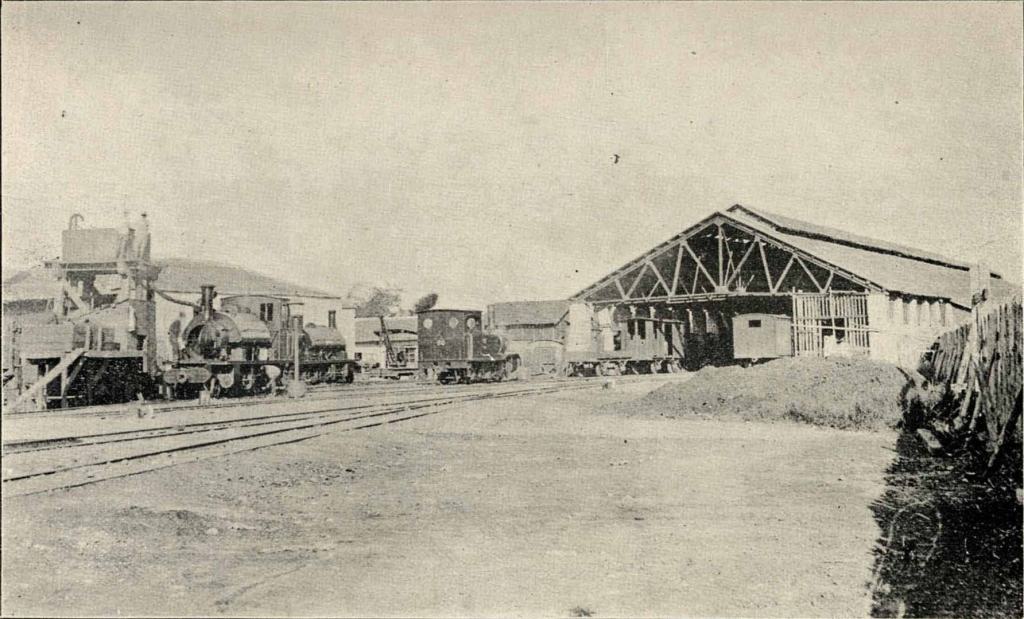
Wikimedia
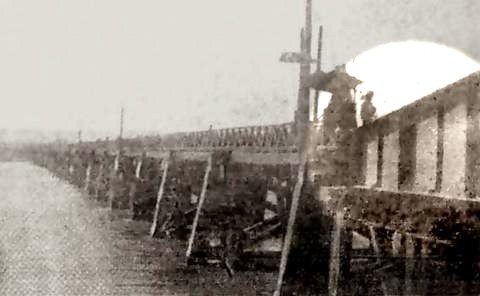
To make the railroad possible, Governor Liu built the Tamsui Wooden Bridge (also called the Tamsui Railway Bridge or the Tamsui River Bridge) from Dadaocheng to Sanchong in 1889. This was a major milestone in Taiwan’s development, being the first bridge across the Tamsui River and by far the largest and most heavily-constructed bridge in Taiwan at the time.
Dadaocheng was then known as Twatutia, which is the Taiwanese pronunciation of the same characters. It is best known today for the vintage Japanese Baroque architecture of the shops on Dihua Street.
One interesting feature of the bridge was its moveable swing span on the Taipei side. This could be rotated to create a gap for large trading junks to access the wharf at Dadaocheng, Taiwan’s largest trading hub.
Wikimedia
(Note: The English-language Wikipedia article on Taipei Bridge erroneously ascribes the swing span to the 1925 version of the bridge. The Chinese-language one does not. Links inline.)
On either side of the rails on the bridge were lanes designed for pedestrians, horses, and carriages.
To Taipei residents, the bridge was a modern marvel and a major social event. There were opening ceremonies, and locals gathered to watch the impressive swing span operate. Official communications lauded the bridge as a major step forward for defense and trade.
In practical terms, the bridge helped Sanchong farmers access Taipei markets more easily, and allowed transportation across the Tamsui River even during typhoon-caused floods that were dangerous to ferry crossings.
However, it soon became clear that there was a massive problem. According to Ino Kanori, one of the most prominent early Japanese anthropologists and historians of Taiwan, Liu Mingchuan’s engineers had originally recommended an iron bridge. However, the Qing imperial court had deemed that too costly.
Wikimedia
The wooden structure that did get built was vulnerable to rotting, the piles slipped around in the sandy riverbed, and there was heavy seasonal damage from typhoon flooding. The bridge worked for a time, but had to receive constant, expensive repairs.
Liu Mingchuan resigned in 1891, leaving the bridge and other problems for his successor, Shao Youlian to deal with. Shao oversaw the completion of the railroad to Hsinchu in 1893, although he criticized Liu’s costly infrastructure projects. But not for long: Following the 1895 Treaty of Shimonoseki, at the end of the First Sino-Japanese War, the Japanese Empire seized control of Taiwan, taking charge of all public works and infrastructure.
In August 1897, the structure (now simply called Tamsui Bridge) was devastated by a major typhoon. The river crossing there was not to be reopened for 23 years. In 1899, the Japanese colonial government in Taiwan decided that Liu’s railway route was flawed: It had too many curves and steep gradients. The railway was rerouted through Banqiao in 1901 across a shorter bridge over the Xindian River. This made a bridge at the original location a low priority.
With the newly-routed railway up and running, the Japanese tore down the approaches of the old bridge to reclaim the iron rails. The central spans had long since been washed away by floodwaters. The train tracks in Sanchong and Xinzhuang were also ripped out and recycled.
Merchants and travelers were back to using boats to cross the river. Shorn of its bridge and railway, it seemed like Sanchong’s hopes for a brighter future were over.
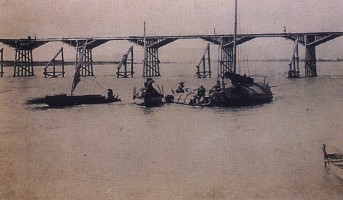
Then, in 1920, another wooden bridge was built, for pedestrians and light vehicles (Version 2). It was called Taihoku Bashi—Taipei Bridge. This was the second of the five bridges at this crossing point, and the first of its name. Sanchong residents rejoiced, as once again they could reliably bring their produce to Taipei’s markets. But, just five months later, another massive typhoon crippled the new bridge.
Wikimedia
It had become clear that wood was simply not going to work. It was time to get serious, something Taiwan’s Imperial Japanese colonizers were known to be good at.
Japanese Steel
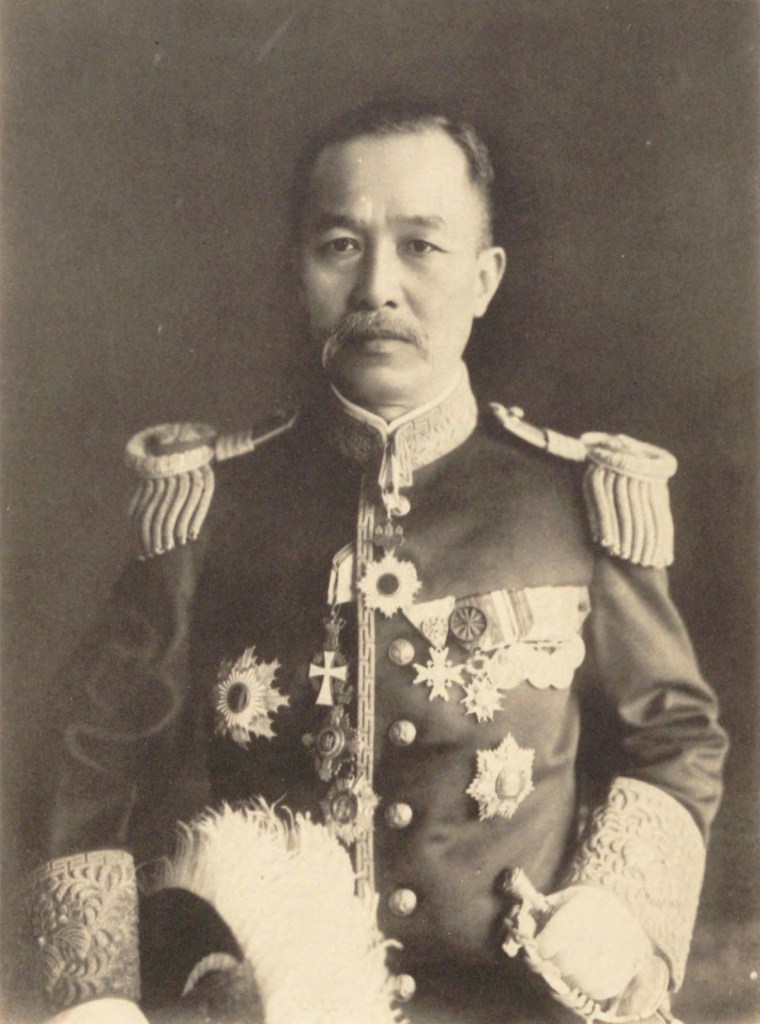
Like Liu Mingchuan, Baron Den Kenjiro, the eighth Governor-General of Taiwan from 1919 –1923, and the first civilian one, was a modernizer. His administration oversaw a paradigm shift in colonial thinking. Whereas previously the Taiwanese were viewed as a conquered people to be ruled strictly, henceforth the Empire would seek to assimilate them into Japanese society.
Wikimedia
The policy was called Dōka or integration, and it included legalizing intermarriage between Taiwanese and Japanese citizens, encouraging Taiwanese entrepreneurs, and even allowing for Taiwanese-owned newspapers.
Governor-General Den was also committed to building up Taiwan’s infrastructure, and had the political skills to get the job done. In 1920, he was able to secure imperial funding for the massive Chianan Irrigation System, which turned the dry and dusty southwest of Taiwan into a fertile agricultural belt.
By Luuva, Own Work
He accomplished this by convincing the Japanese parliament that rice production was a national security issue. Japan was experiencing rice riots at that time, and Taiwanese production could stabilize the home front, Den had asserted.
In a similar fashion, he was able to acquire sufficient funding for a modern steel bridge at the same location to replace the failed wooden versions. His strategy here was to upgrade the structure into a critical part of Taiwan’s “Longitudinal Trunk Road” highway system, the precursor to Provincial Highway 1. This gave him access to additional colonial financing.
Baron Den Kenjiro saw that the age of motor cars was at hand. This was to be the first bridge for automobiles across the Tamsui River, and it would connect Taipei to Sanchong, Xinzhuang, Taoyuan, and beyond.
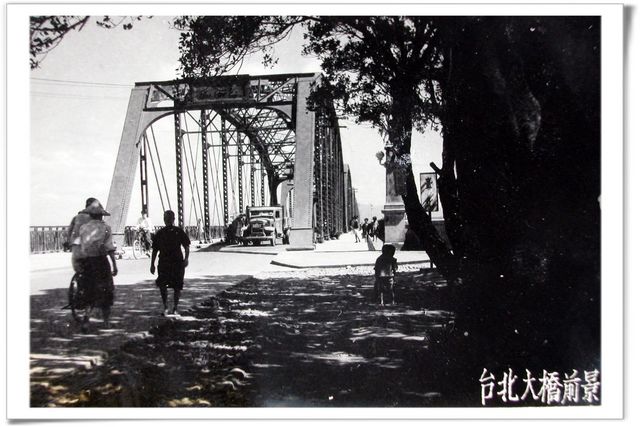
Wikimedia
The new structure (Version 3) had seven steel truss spans anchored to reinforced concrete piers sunk deep into the bedrock below the silty river bottom. These were shaped hydrodynamically to deflect incoming floodwaters and prevent debris from snagging. The steel and special concrete for the project had to be imported from Japan.
The new “Seven-Pillar Iron Bridge,” as it was nicknamed, opened with much fanfare on June 18, 1925, the 30th anniversary of Japanese rule in Taiwan. Grand ceremonies were held, including inaugural crossings of the bridge.
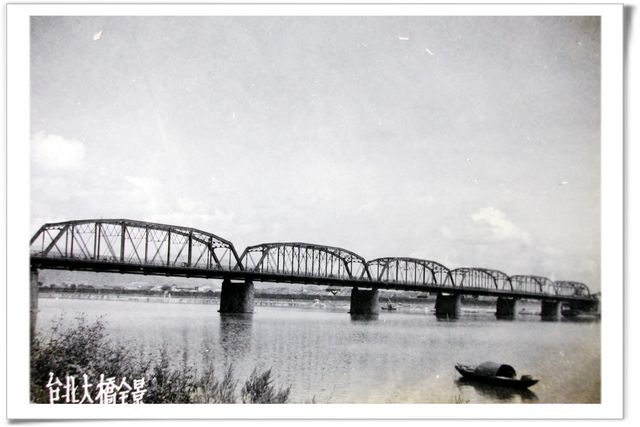
Wikimedia
It was a striking new landmark, and became much celebrated in painting, photography, and poetry. Lovers used to take evening walks on the bridge to see the iconic “Iron Bridge Sunset”—one of the so-called “Eight Scenic Views of Taipei”—with the steel trusses softly glowing with orange light.
Although Governor-General Den was absent, his tenure having ended in 1923, he could be proud of his legacy.
As promised, the shiny new span staunchly resisted typhoon floods. Over the next few decades, it was a strong catalyst for growth, elevating Dadaocheng to its peak of wealth and prominence, and linking Taipei City and its satellite communities to the west into a single metropolitan area.
For Sanchong (then part of Luzhou Township, Xinzhuang District, Taipei Prefecture (Roshū-shō, Shinshō-gūn, Taihoku-shū,) the bridge was transformative. The approaches on the Sanchong side became a market town. New streets and buildings were created. Citrus and jasmine farmers thrived, while agricultural processing and light industry sprang up.
New migrants to Taipei started to settle there as an affordable “stepping-stone” location within commuting distance of Taipei. The area began to bustle, the population doubling from around 10,000 residents in 1925 to about 18,000 in 1940, according to government records.
This was nothing compared to the furious growth that was to come. But it was a start. Sanchong’s days as a sleepy rural area were coming to an end.
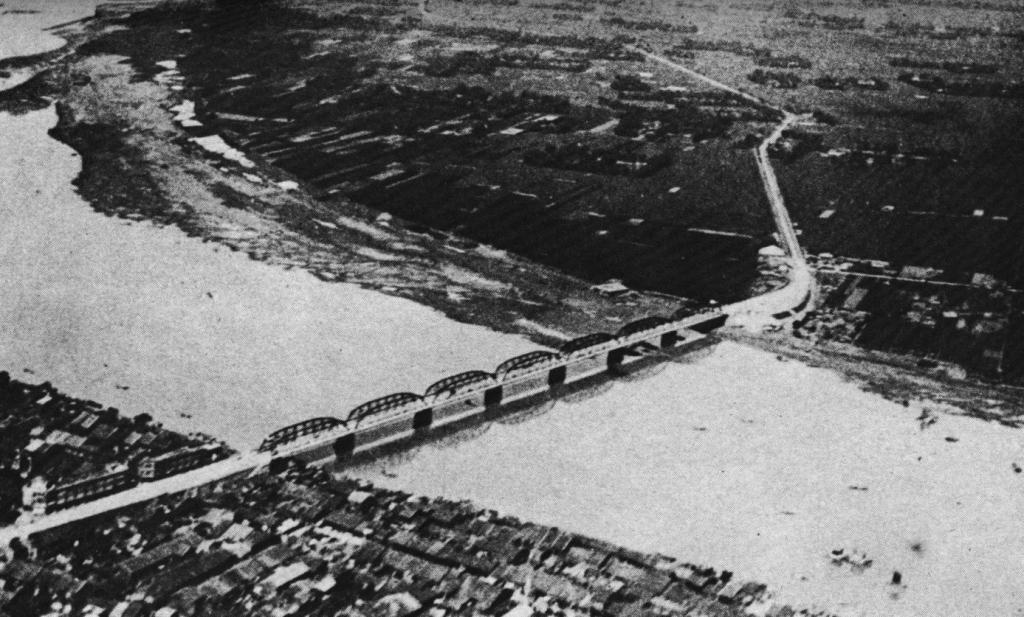
Wikimedia
Map Data from Google Earth. Image Landsat / Copernicus
Read Part 2 of the Sanchong History Series, “GETTING GRITTY Sanchong’s Post-War Urbanization”.


Leave a Reply