This is Part 2 of the Sanchong History Series. If you haven’t read Part 1 “Crossing into the City”, which talks about the 1889 and 1920 versions of Taipei Bridge, you can read it here.
What a difference a bridge makes
Taipei Bridge has always been important because it connected the business center of Taipei to the cheaper, less-developed land in Sanchong. The third and fourth versions of the bridge, built in 1925 and 1969 respectively, were the most significant to development in the Taipei area.
In fact, if you look at what happened between those dates, you get a good snapshot of how the economic foundation for modern Taiwan was laid.
It was the best of times…
In 1925, Taiwan seemed to be doing quite well—for an occupied colony, that is. It was the 30th anniversary of Japan’s takeover, and special exhibitions were held in Taipei to celebrate the impressive improvements the colonizers had made to public health, education, law and order, agriculture, and infrastructure such as roads, rail, and bridges.
The expo featured ultra-modern electric streetlights to attract nighttime crowds, and the first public radio broadcast in Taiwan.
Even sleepy Sanchong was changing. Until the iconic “Seven-Pillar Iron Bridge” was built in 1925, replacing two earlier wooden versions, the flat, marshy plain was mainly known for citrus orchards and endless farms of jasmine and gardenias. These were used to scent the tea sold from the commercial hub of Dadaocheng, on the opposite bank of the Tamsui River.
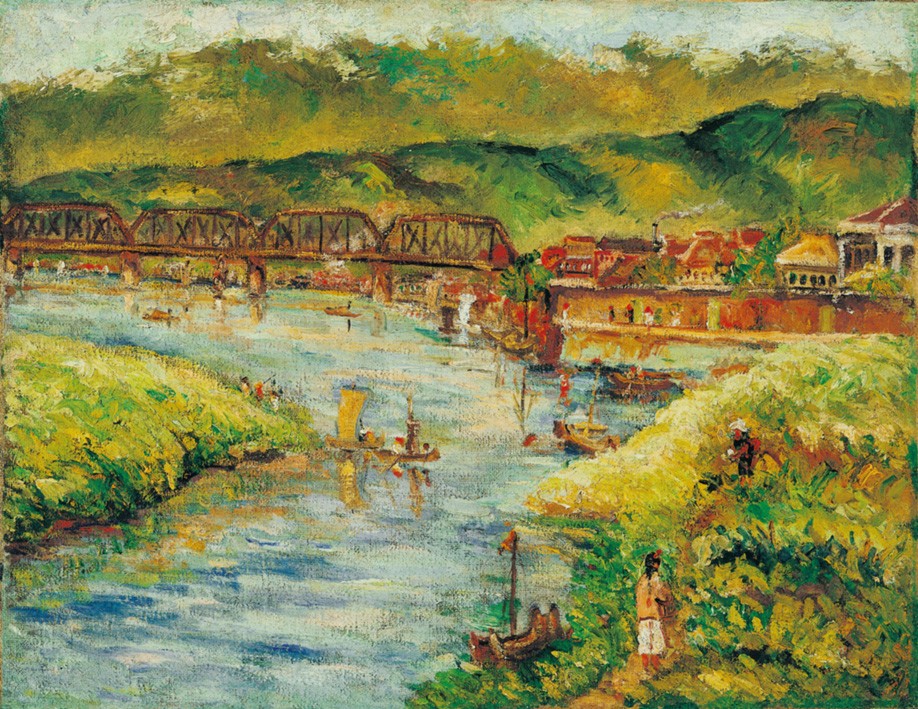
While that trade was profitable, the new steel truss bridge helped unlock Sanchong’s economic potential. Investors jumped on the chance to buy undeveloped properties at a fraction of Taipei prices. New shops, homes, and factories were being built, replacing the farmlands.
Society seemed to be changing too. Sparked by students exposed to new ideas while studying in Japan, dreams of self-rule and a Taiwanese cultural identity were in the air. This new vision was promoted by the Taiwanese Cultural Association in public lectures and their newspaper, the Taiwan Minpao.
Throughout Taiwan in the 1920s, there was a mood of growth, progress, and optimism for the future.
Sadly, it would not last long.
With friends like this…
Starting in the 1930s, wave after wave of intense disruptions battered the island: The Great Depression, the rise of Japanese militarism, World War II, and Japan’s surrender. Taiwanese society was severely affected, although not on the scale of China or the Philippines.
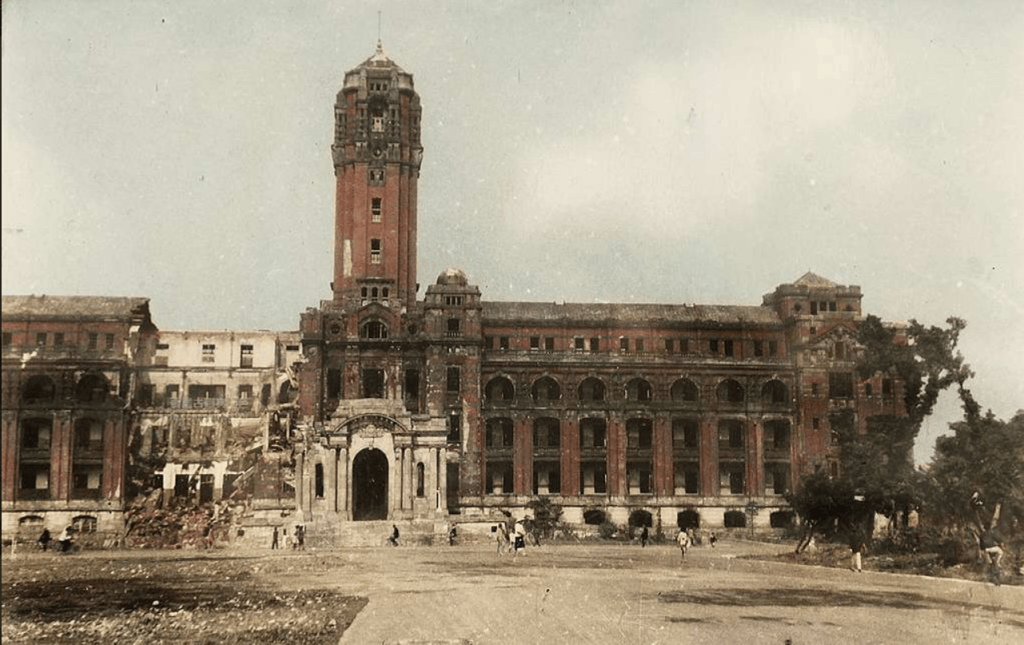
Then came the takeover of Taiwan by the Republic of China (ROC), led by the Chinese Nationalist Party (KMT) in 1945.
The nationalists from the mainland (usually referred to as “Mainlanders”) were initially welcomed by the Taiwanese, but this was short-lived. Many of the ROC troops were badly behaved and harassed the locals. Their political leaders were even worse. Under Governor Chen Yi, senior KMT officials grew rich while grossly mismanaging an economy already in tatters due to the war.
Local elites were pushed aside in favor of the Mainlanders, who numbered at that time probably no more than 100,000 out of Taiwan’s population of 6.3 million people.
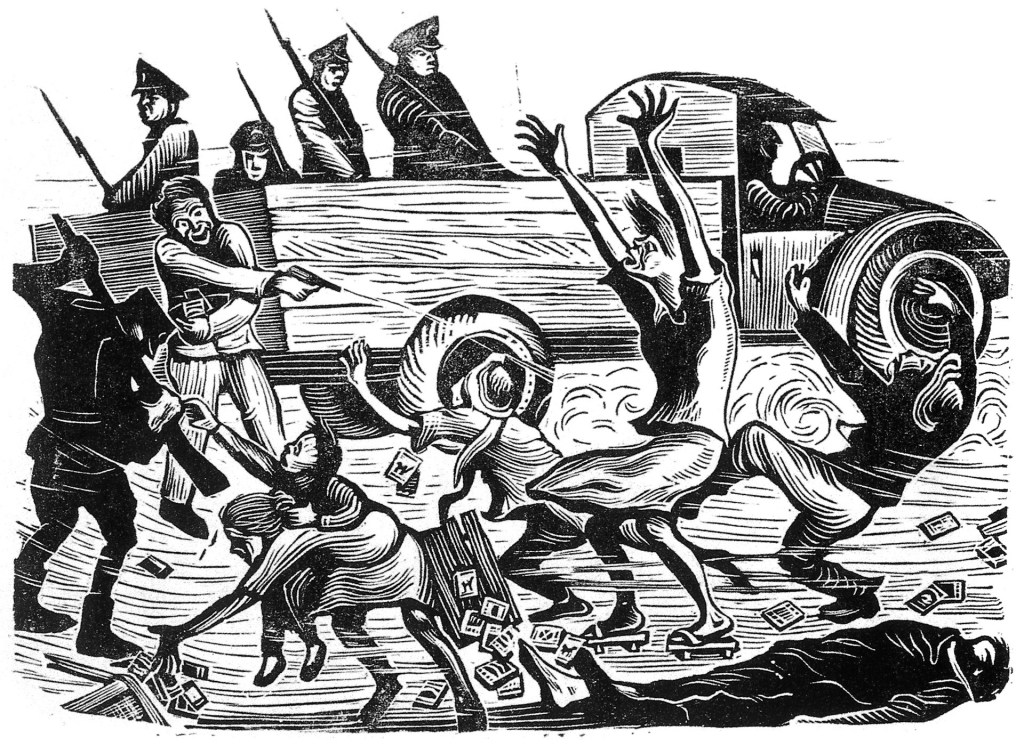
Things boiled over on February 28, 1947: Outside the Tianma Teahouse in Dadaocheng, a Tobacco Monopoly Bureau worker struck a local woman selling black-market cigarettes on the street. An angry crowd confronted him, and he fired his gun into them as he fled, killing one person.
The news set off rioting all around Taiwan, which led to brutal reprisals by the government and oppressive martial law.
Then, amidst all this instability, about 700,000 refugees from Mainland China came to Taiwan from 1948–1949 after Chiang Kai-shek’s defeat in the Chinese Civil War. (The number would rise to around 1.2 million by 1955.) This further fueled tensions between locals and Mainlanders.
Mainlander military officers, soldiers with families, and those with connections got to live in purpose-built communities like the Sanchong Air Force Military Kindred Village, a former Japanese air defense center.
Others had to make do as best they could, creating shantytowns of makeshift housing formed from scraps of wood and metal, squatting on marginal land such as flood-prone riverbanks.
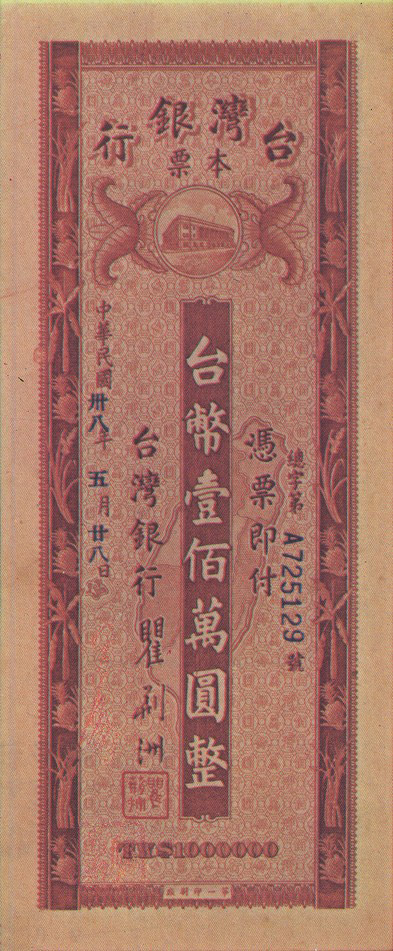
Taipei was crowded with desperate people trying to eke out a living in an impoverished economy. The country’s gross domestic product (per capita PPP) was shockingly low—on par with the Democratic Republic of the Congo, Bolivia, or Haiti.
Due to rampant overprinting of money, prices skyrocketed. A catty (600 grams) of rice cost about 1 or 2 Old Taiwan Dollars in 1946. In June 1949, the price was near 160,000 OTD.
The government clearly had to get a grip on the situation, and fast.
The tough get going
Chen Cheng was the man widely credited with stabilizing Taiwan’s post-war economy. He was also one of the main perpetrators of the White Terror, which involved arrests, torture, or execution by the secret police of alleged opponents of the KMT regime.
A former military commander in China, and long-time protégé of Chiang Kai-shek, Chen held several senior posts in the Taiwan government over his career, such as governor, premier, and vice-president. He was also the commander of the infamous Taiwan Garrison Command.
Working with Chiang Ching-kuo, President Chiang Kai-shek’s son and head of the security services, Chen had the muscle he needed to prevail in the ROC’s political infighting and get things done.
Chen would handle the politics, but the economy would be managed by his appointees, a group of highly talented technocrats.
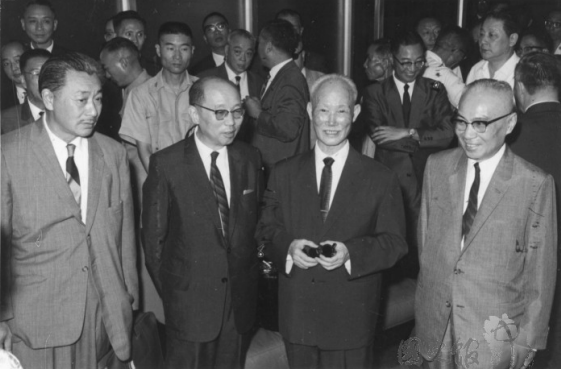
One of these was Yen Chia-kan, also known as C. K. Yen. As Chairman of the Bank of Taiwan, under Chen Cheng, he launched the New Taiwan Dollar (NTD) in 1949, at a rate of 40,000 old Old Taiwan Dollars to one NTD. The move was successful largely because the currency was backed 100% by gold reserves that the KMT had taken with them from China.
It was also helped by American aid money and commodities coming in after the start of the Korean War.
As a result, the early 1950s saw the end of hyperinflation and a return to economic growth.
The stage was set for Taiwan to industrialize. This phase would be quarterbacked by another brilliant Chen Cheng appointee, K.Y. Yin, a personal friend of T.V. Soong, the brother of Madame Chiang Kai-shek.
Under a series of official roles, Yin coordinated the restriction of imports of many finished products and supported their manufacture in Taiwan instead. This policy is known as import substitution. Yin often invested US aid money to build factories.
Throughout the 1950, Taiwan’s industrial base grew, especially in paper, wood, cement, plastics, fertilizer, chemicals, food processing, textiles, and basic manufacturing, such as bicycles.
Chen Cheng’s technocrats had done their jobs well. Taiwan’s economy was back in business.
The Taipei Dream
Of course, all this new industrial production had to happen somewhere.
Sanchong, right across the river from Taipei and connected by the Taipei Bridge, had lots of cheap and undeveloped land. It also had major roads connecting it to Xinzhuang, Taoyuan, and beyond. For entrepreneurs, it was perfect.
One of the first major waves of industrialization in Taiwan was the textile industry. Large textile companies such as Sanchong-based Chung Shing Textile Co., famous for the “Three Guns” underwear brand, benefited from restrictions on imported competition.
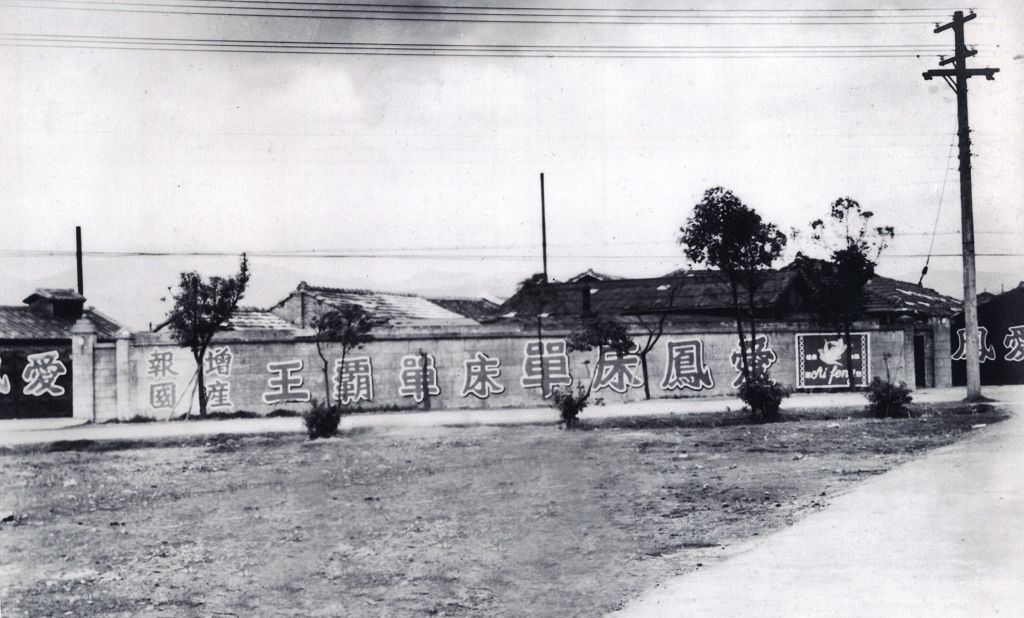
Ai-Feng Weaving Mill, established in 1950 on Sanhe Road, specialized in mass-producing pure cotton towels and bedsheets. Ai-Feng had access to raw cotton from American aid.
Both companies made a fortune.
There were other businesses in the new ecosystem, of course, including a thriving “rag” trade, which repurposed scraps and discarded textiles from the big mills into usable clothing.
Most of the textile workers were young women from rural Taiwan who boarded trains to the capital, crossing Taipei Bridge to find work in the mills. There, they toiled long hours and slept in crowded dormitories, saving money to send back home.
This “factory girl” phenomenon was so widespread that it was reflected in popular music.
One famous song of the time was “Orphan Girl’s Wishes” (孤女的願望), which tells the story of a teenage girl from the countryside who travels to Taipei for work.
The original version linked below is set to music composed by Masao Yoneyama, with lyrics in Taiwanese by Yeh Chun-lin. It is performed by Chen Fen-lan.
Here’s a translation of the final verse:
“Please, may I ask you, office clerk at the gate?
They say this factory is hiring.
But though I am young, I don’t know a single skill.
Beyond sympathy, I have no hope in this unfamiliar place.
Even if the pay is small, I’ll endure three winters, five winters.
For the sake of the future, for the sake of happiness, I am willing to suffer and keep working.
One day, surely, I will find peace of mind.”
The song was made into a popular film in 1961, starring the singer Chen Fen-lan herself as the main character, and later, a TV series. This shows how strongly this story resonated with the vibe of the time.
The Big Smoke
Attracted by the industrialization of the 1950s, tens of thousands of people were moving to Sanchong for work, especially from southern counties of Taiwan like Chiayi, Yunlin, and Changhua. Many men worked construction jobs in Taipei; others became small entrepreneurs who bought one lathe or stamping machine and kept it working 24 hours per day.
Its farmland was rapidly disappearing, replaced by new factories, homes, roads, and shops. The air became clouded with smoke and steam, and the noise of machines disturbed the night. The Tamsui River became more and more polluted.
People from different places and backgrounds were mixing together in markets, factories, and shantytowns, becoming neighbors and friends.
The gritty, blue-collar Sanchong that we know was taking shape.
In with the new
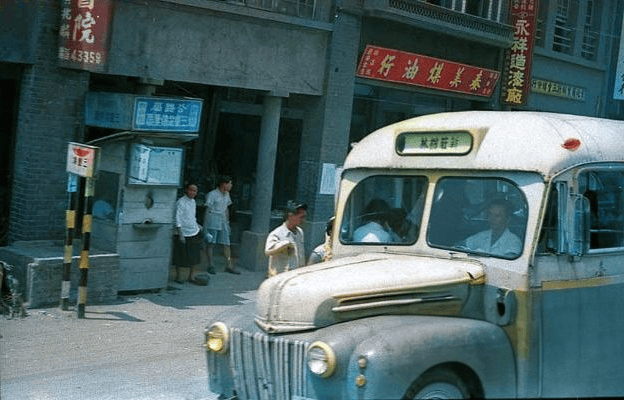
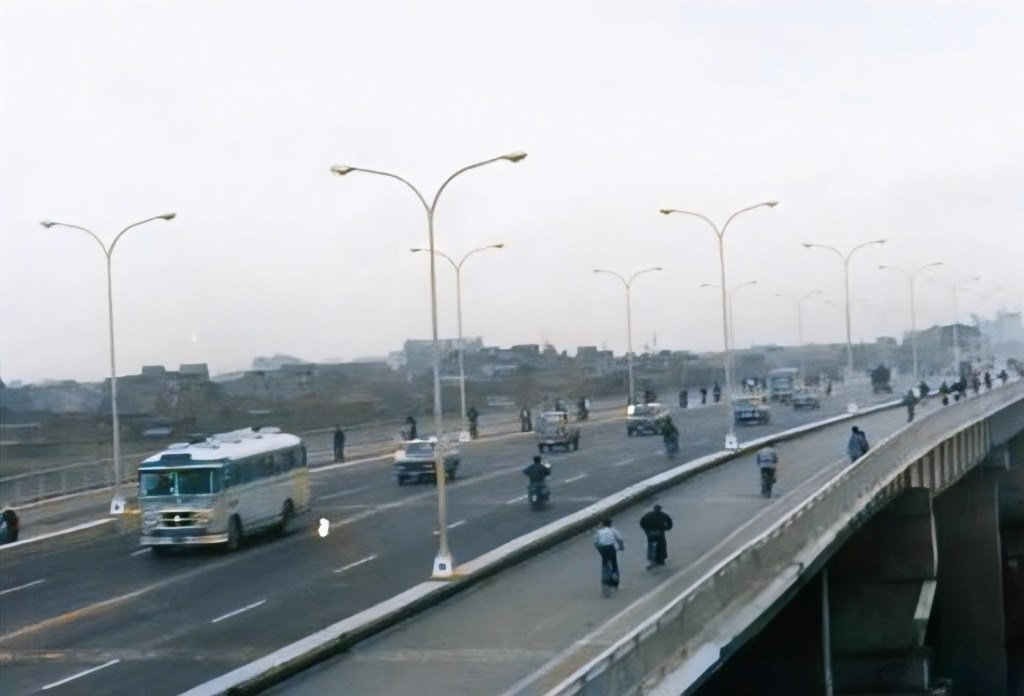
As the population and the business activity grew, however, so too did the traffic on the Taipei Bridge. There were large trucks bringing goods out, buses full of commuting workers, an ever-increasing number of cars, and thousands of bicycles.
The old bridge was sturdy, but it was narrow, and not designed for this kind of load. The trusses and road-bed began to degrade.
Rush hour became a daily crisis. From 1960–61, the bridge was reduced to one lane of alternating traffic as it was repaired.
Once a lifeline, now it was becoming a bottleneck. Something had to be done.
What’s more, it wasn’t just the bridge that needed an overhaul. By the late 1950s, the import substitution policy had hit a wall. Taiwan’s small domestic market was becoming saturated.
It was time to go for the global market, with an aggressive plan to become a major exporter. This new shift would become one of the largest sustained economic booms in human history, the Taiwan Miracle.
And Sanchong would be right at the heart of it, in no small part due to the fourth version of the Taipei Bridge.
Stay tuned for Part 3 of the Sanchong History Series, coming soon.
NOTE 1: Images on this post are by the author, or sourced from the public domain or Wikimedia Commons. In some cases, historical black-and-white photos have been digitally upscaled and/or colorized for clarity or effect.
NOTE 2: This article is 100% human written. AI is used solely for research and editorial feedback, and not for content generation, rewrites, or suggested wording.


Leave a Reply